
The Mace of the National Assembly
History and Origin
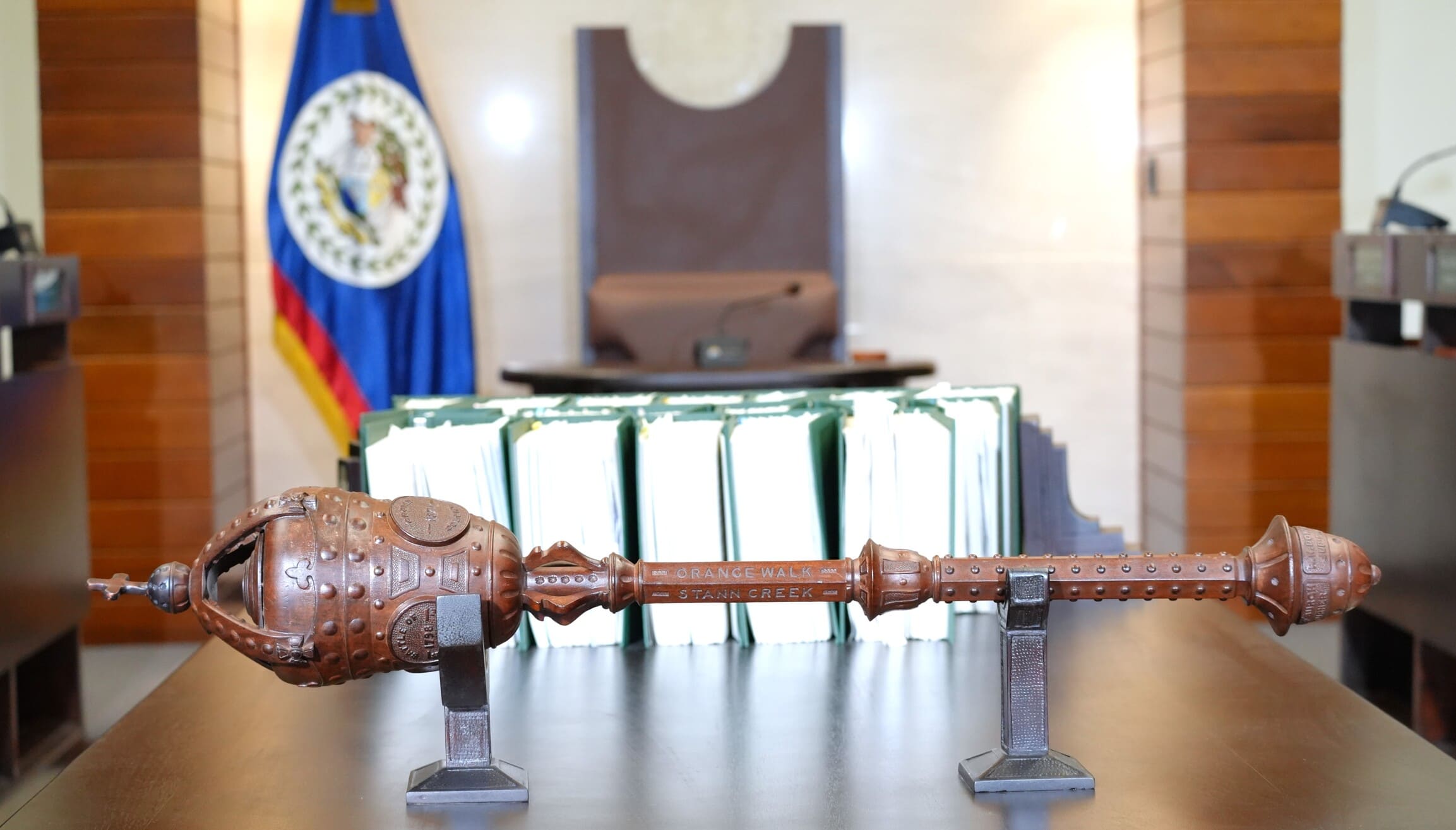
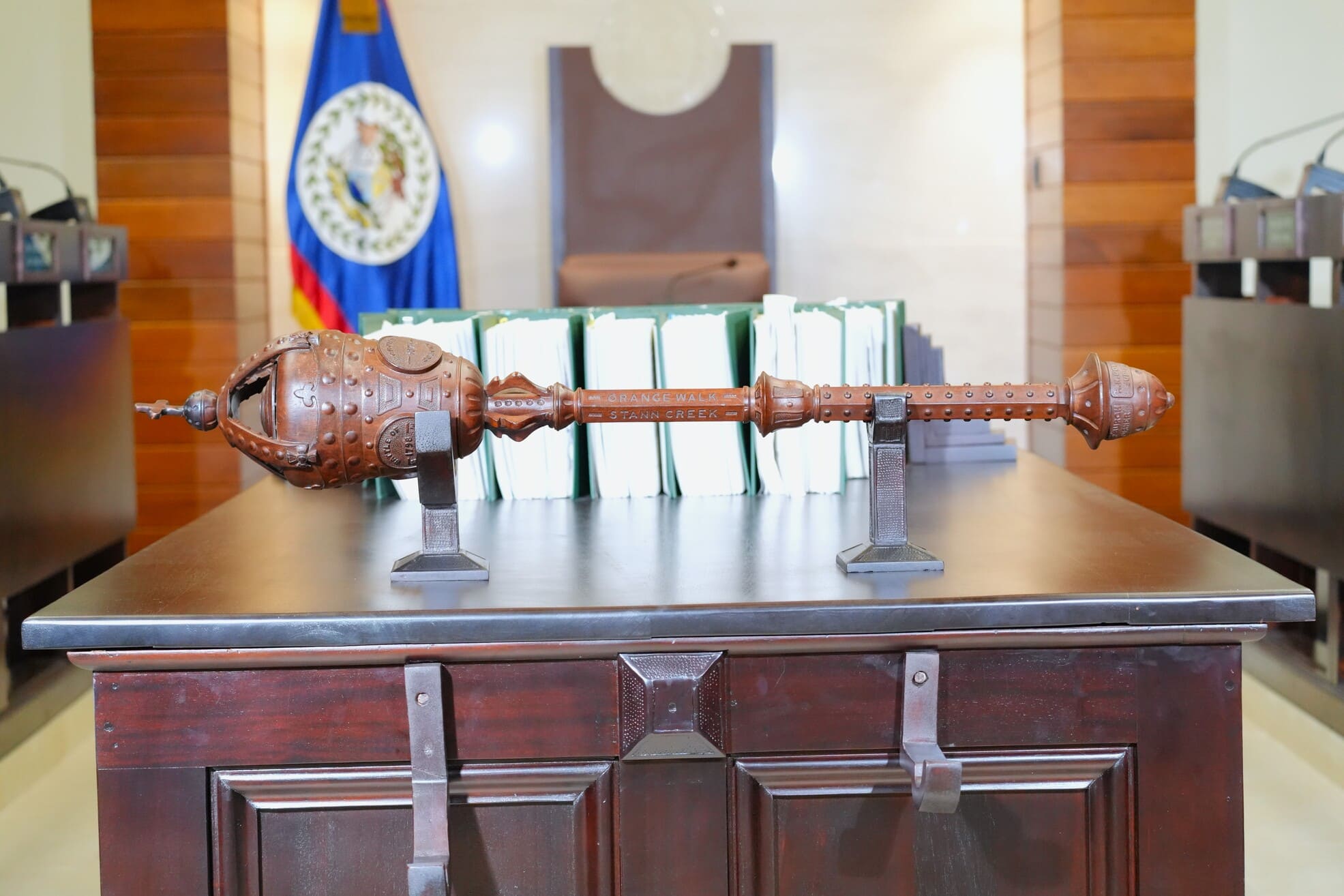
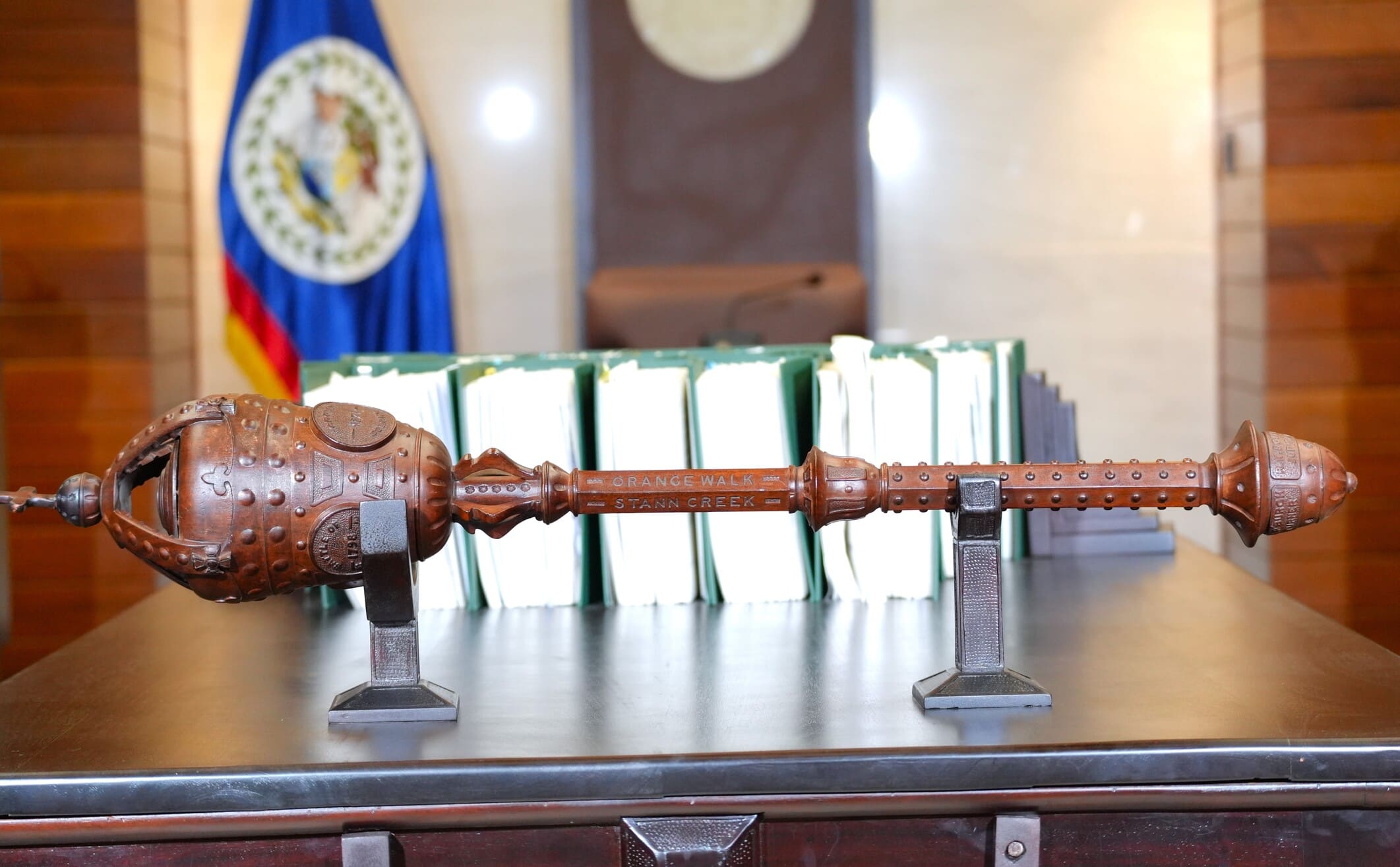
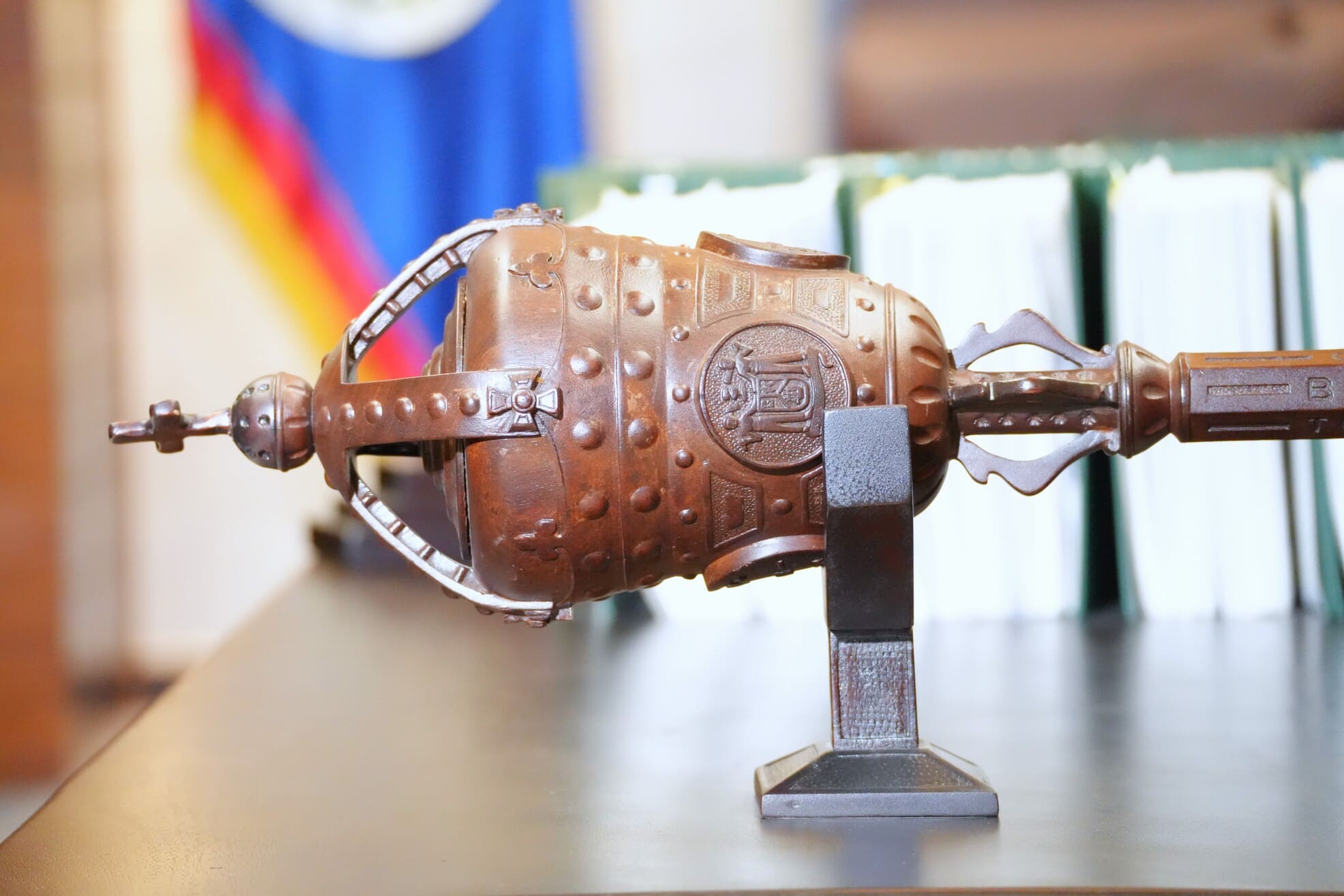
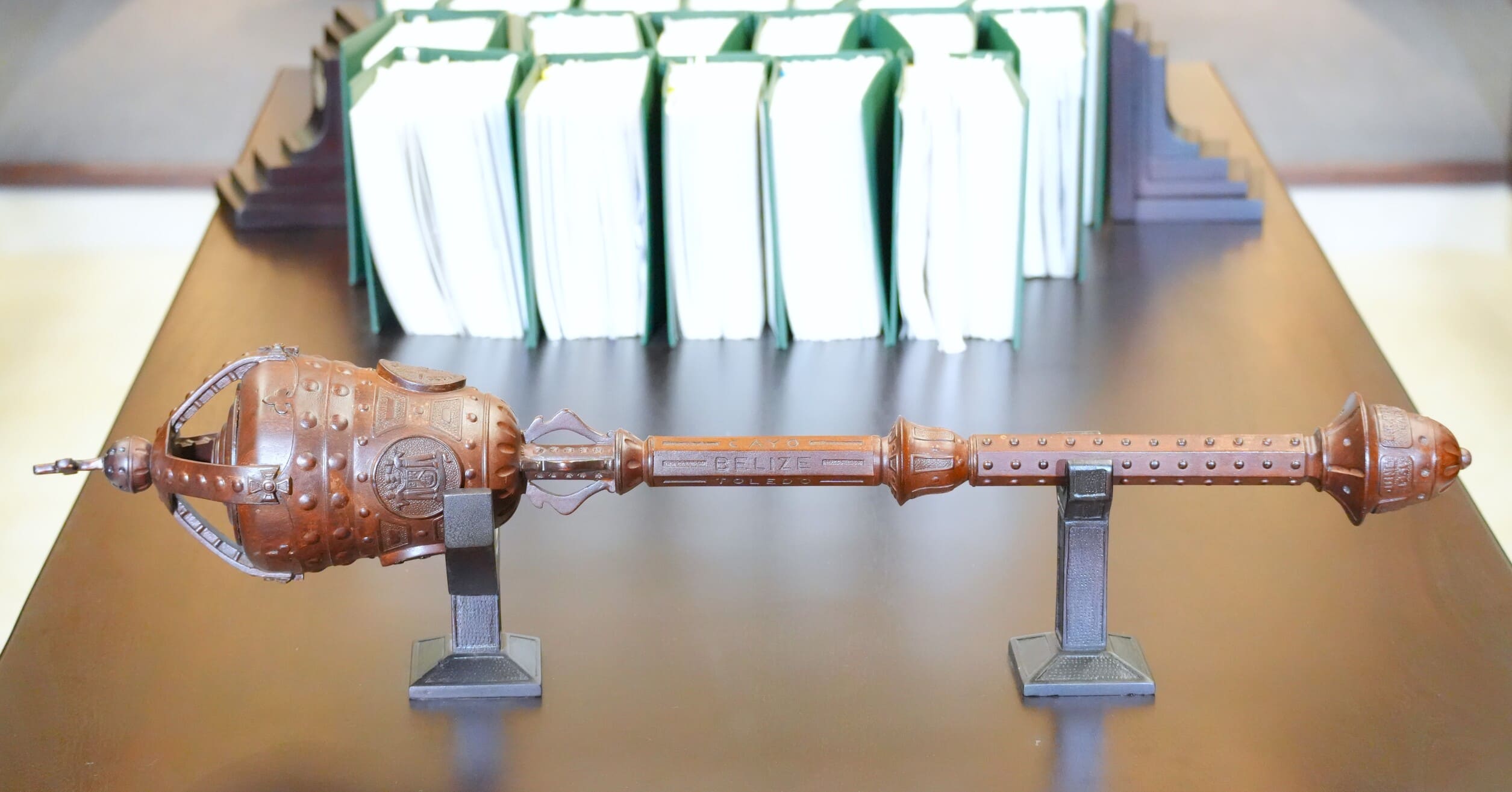
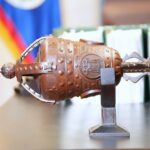
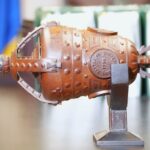
The Mace of the National Assembly of Belize is made out of mahogany, which flourished for many years at the grounds of the Government House in Belize City and was blown down in the hurricane of 1931.
- Manufacture Date: June 1951
- Presentation: It was presented to the Legislative Council on 18 January 1952 by Sir Ronald Garvey (Governor of British Honduras 1949-1952).

History and Origin
The Mace of the National Assembly of Belize is made out of mahogany, which flourished for many years at the grounds of the Government House in Belize City and was blown down in the hurricane of 1931.
- Manufacture Date: June 1951
- Presentation: It was presented to the Legislative Council on 18 January 1952 by Sir Ronald Garvey (Governor of British Honduras 1949-1952).
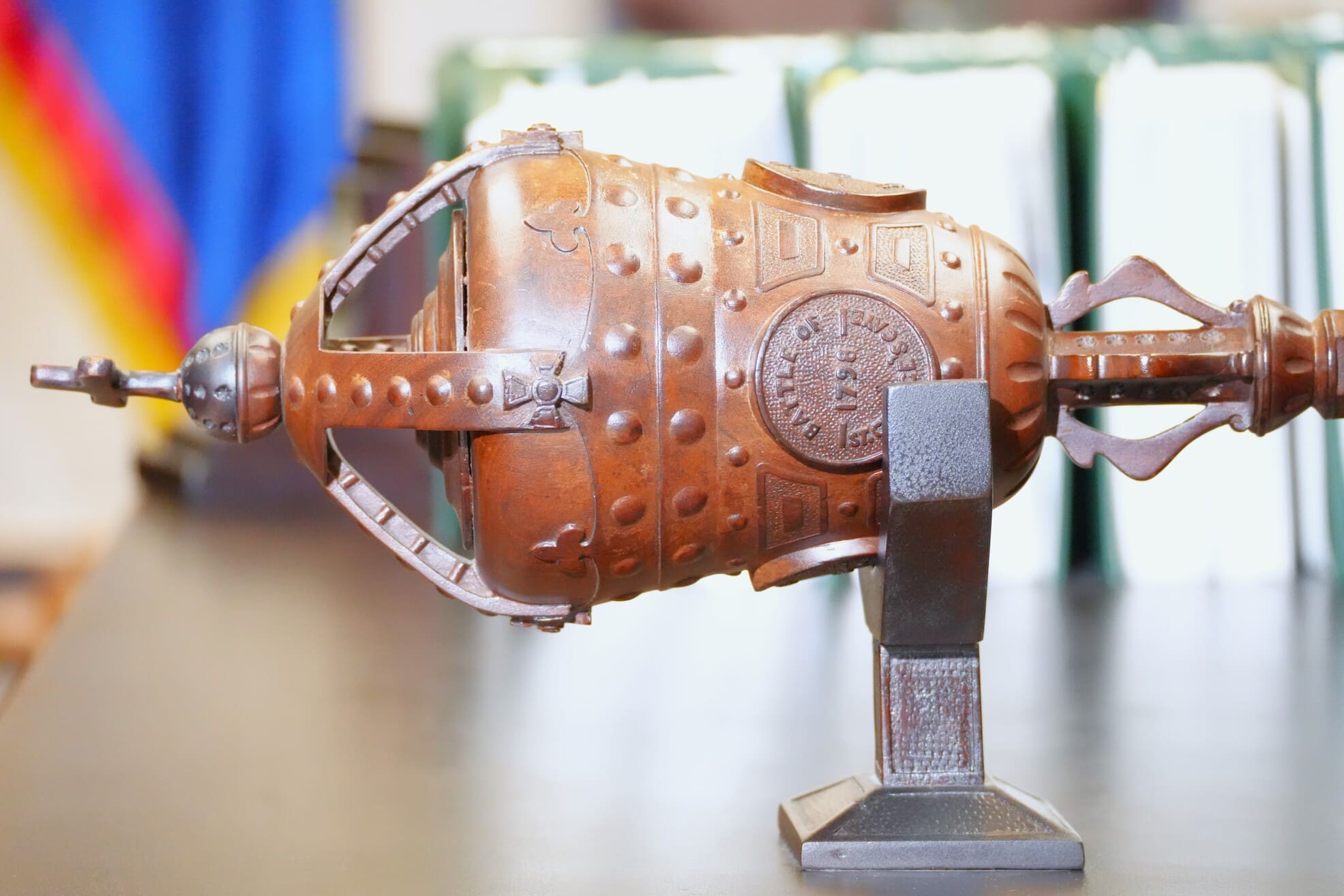
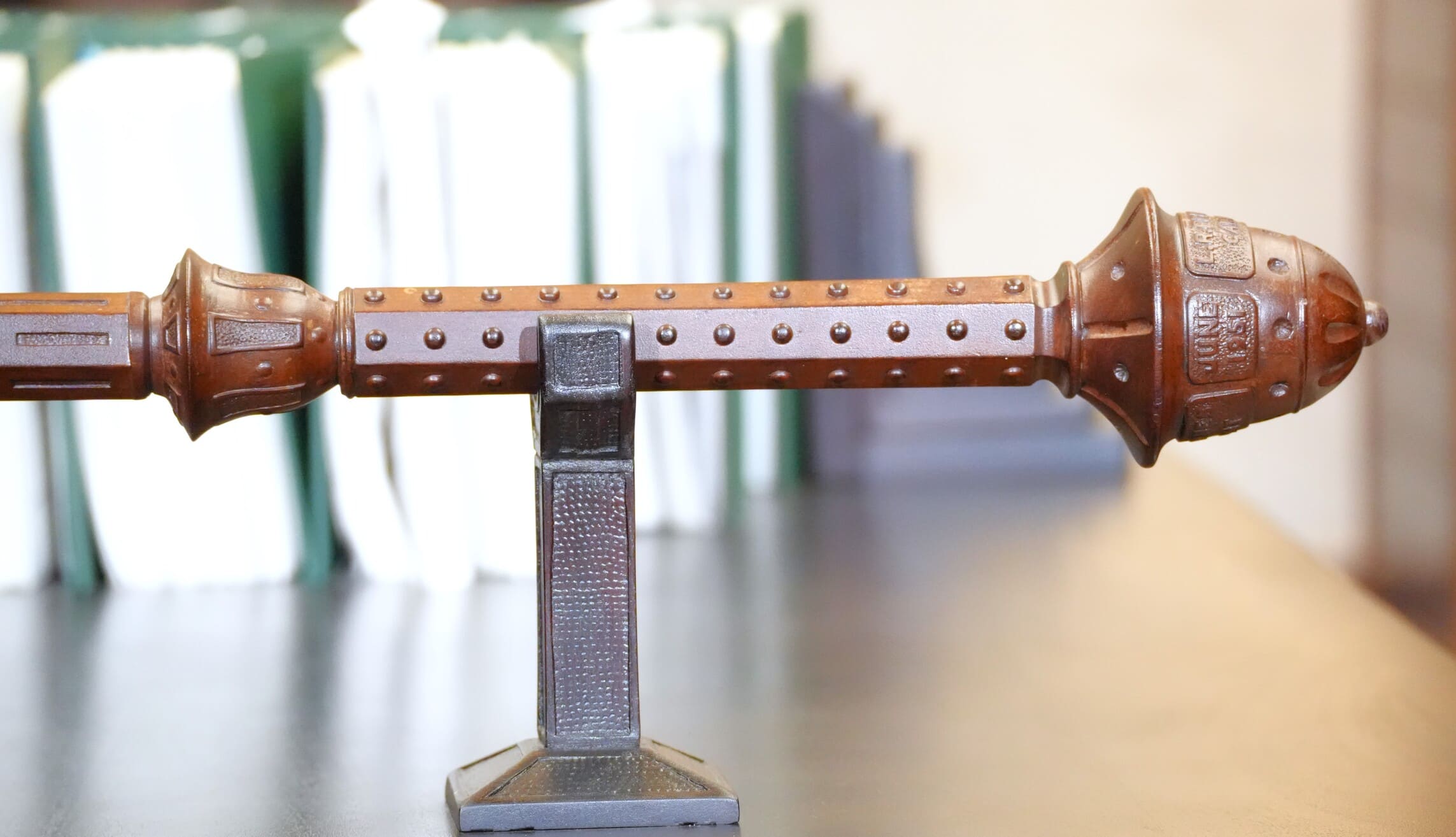
Craftsmanship and Design
- The First Settlement (1638)
- The Battle of St. George’s Caye (1798)
- The formation of the Crown Colony (1871)
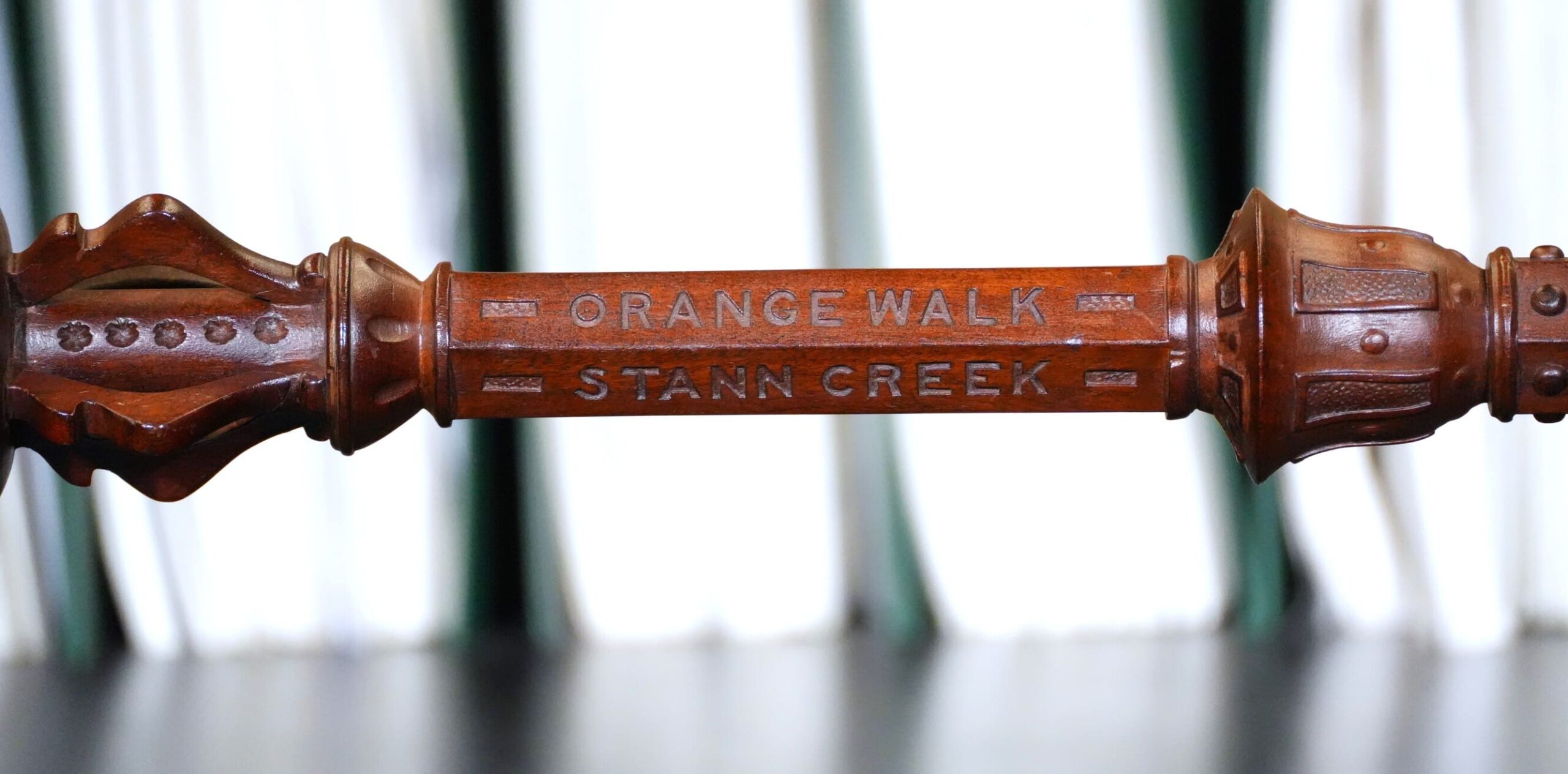
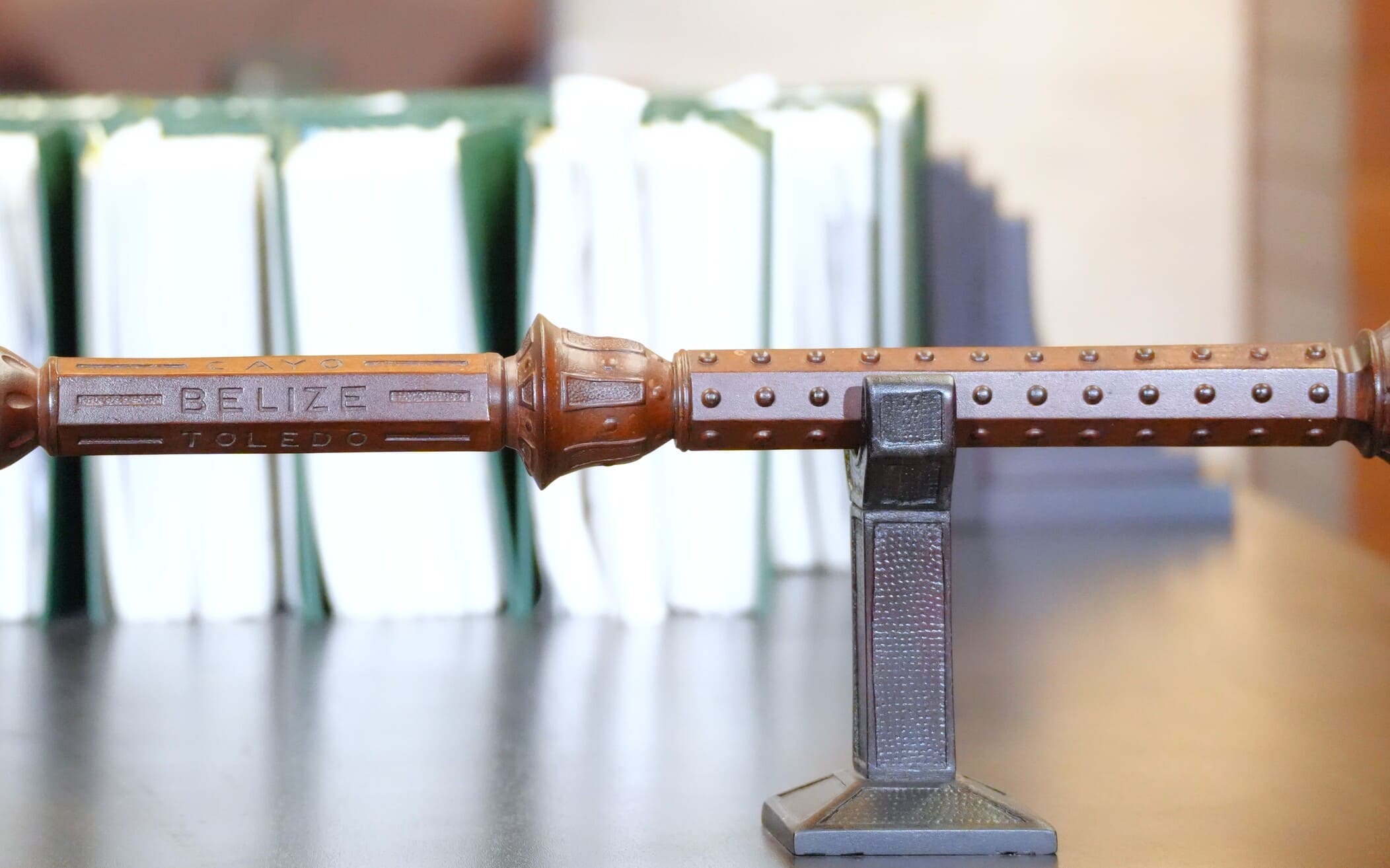
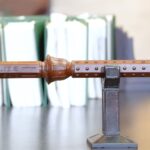
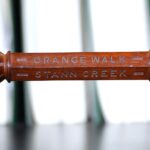
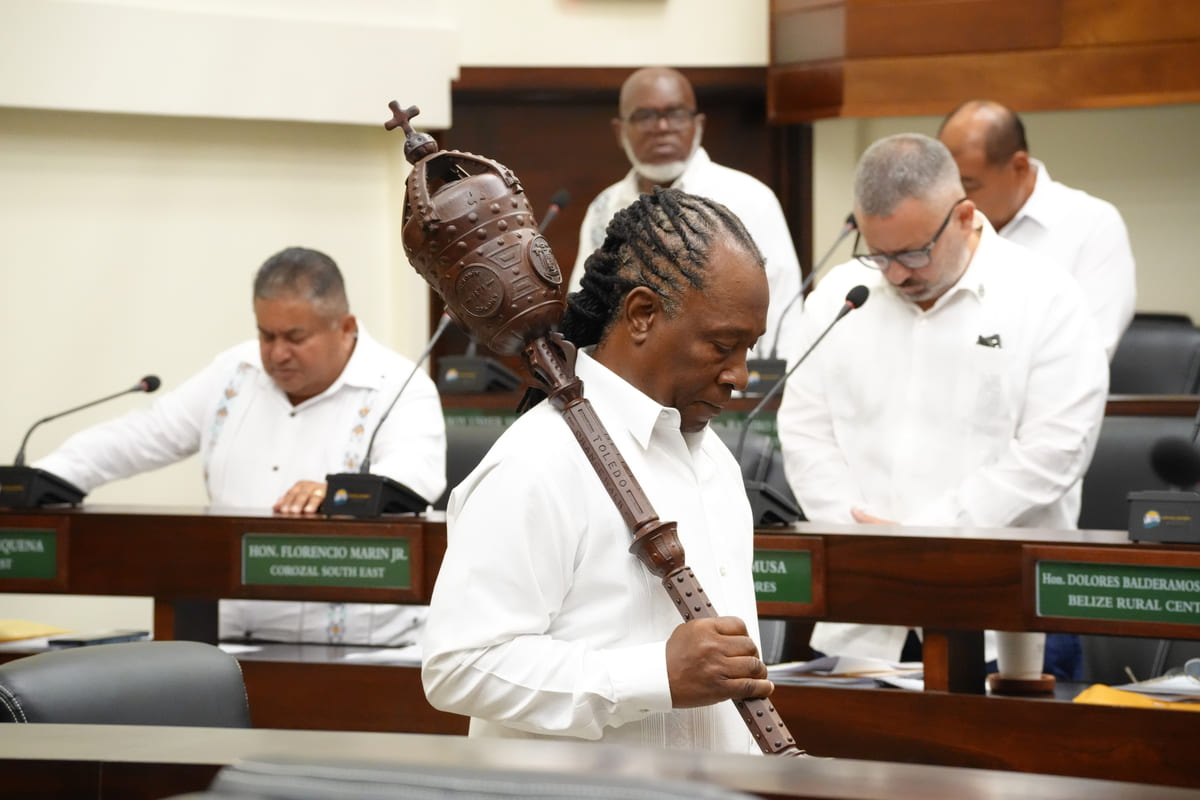
On the shaft are the names of the six districts: Corozal, Orange Walk, Belize, Cayo, Stann Creek, and Toledo.
- The Craftsmen:
- R. N. Downes: Superintendent
- L. R. Perera: Carver
- G. P. Gough: Turner (woodturning)
Protocol and Usage
The Mace is carried by the Macebearer who precedes the Speaker for the opening and adjournment of each Sitting of the House of Representatives.
During Session
The Mace is placed on a rack on the Clerk’s Table with its head pointing towards the Government side (seated to the right-hand of the Speaker’s Chair).
During Committee/Suspension
During a Committee of the Whole House or during a suspension the Mace is placed on a rack which is below the Clerk's Table and it is placed on top of the Clerk's Table when the meeting resumes and the Speaker is present in the Chamber.
Symbolism and Legal Authority
Standing Order 6 (2) of the House of Representatives states that the Mace shall be present at all Sittings. The House of Representatives cannot sit without the Mace because it is the symbol of the dignity and authority of the Speaker.